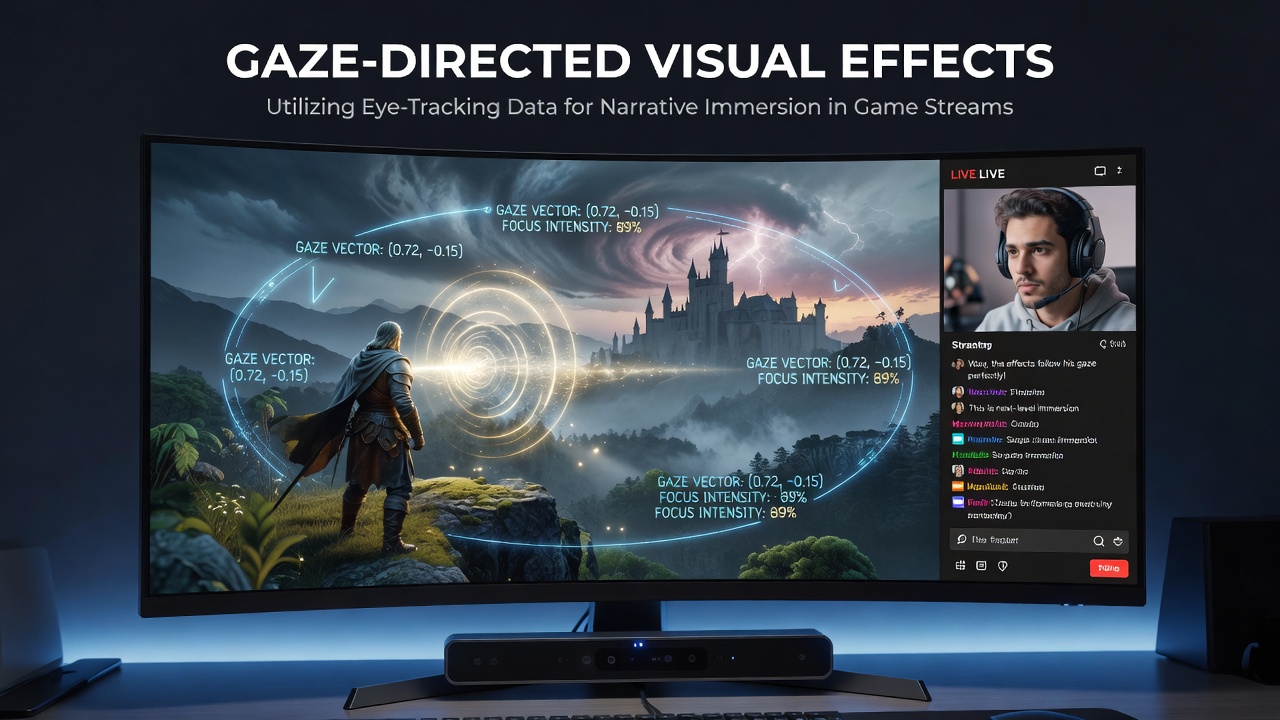
Utilizing Eye-Tracking Data from Compatible Hardware to Create Gaze-Directed Visual Effects in Narrative-Driven Game Streams
Eye-tracking hardware such as Tobii devices and similar compatible units integrates with gaming PCs through USB connections, and these systems capture real-time pupil position data at rates exceeding 120 frames per second while narrative-driven titles like The Last of Us or Disco Elysium run on stream setups. Developers map the incoming coordinates directly to engine variables in Unreal Engine or Unity, which allows visual elements to respond when viewers or players direct their gaze toward specific areas of the screen during live broadcasts.
Hardware Integration and Data Processing
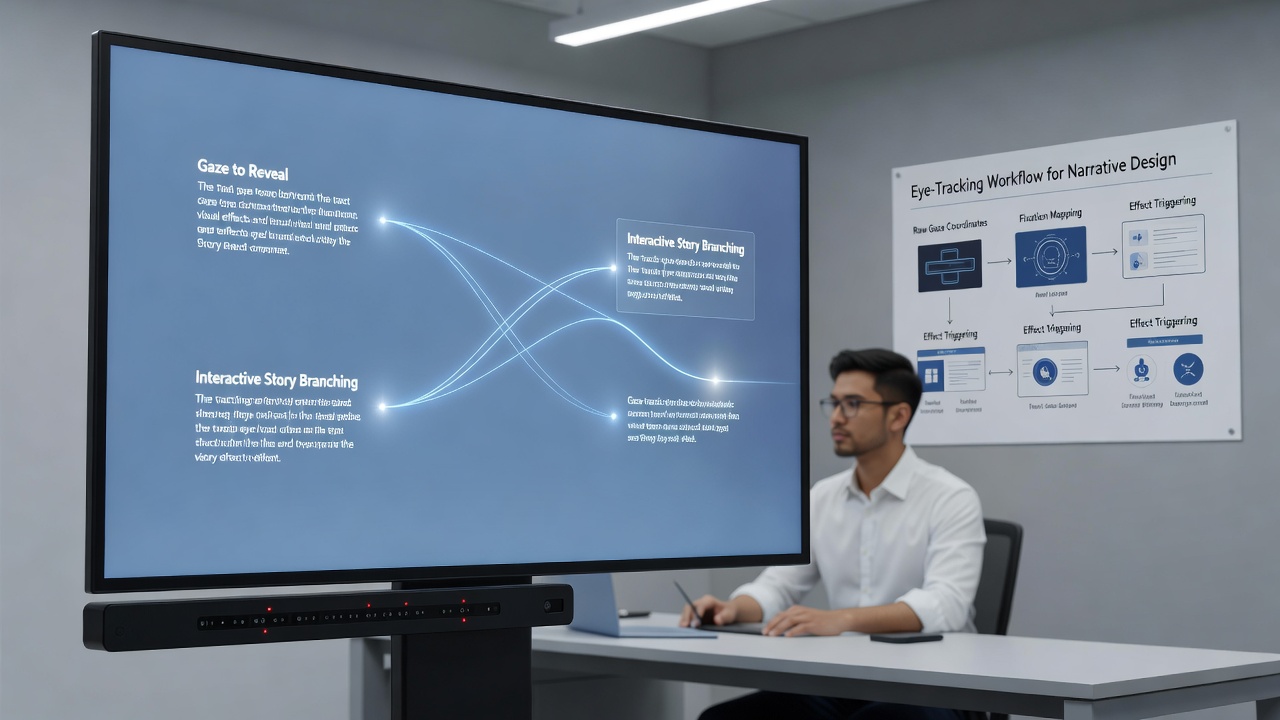
Compatible eye trackers attach to monitor bezels or sit below displays, and calibration routines prompt users to follow on-screen targets for under two minutes before accurate mapping begins. Software development kits from manufacturers convert raw gaze vectors into normalized screen coordinates that streaming overlays then receive via local APIs, while OBS Studio plugins handle the translation layer without introducing noticeable latency in most configurations tested through 2026. Data filtering algorithms smooth minor head movements and blinks, which ensures stable input for effects that highlight dialogue choices or environmental details only when the camera lingers on them.
Implementation in Narrative Game Streams
Streamers running story-focused titles activate gaze-directed shaders that intensify fog or particle effects around areas where the tracked gaze rests for more than 800 milliseconds, and this technique reveals hidden text or alters lighting in real time for audiences watching the broadcast. In one documented setup from a European esports laboratory, developers linked gaze data to branching narrative triggers so prolonged focus on an object advanced subtle plot elements visible only to that stream session. Multiple wearables can feed into the same pipeline when secondary devices monitor additional participants, yet single-user Tobii 5 or equivalent units remain the standard for most narrative broadcasts because they require minimal additional calibration overhead.
Viewer Interaction and Overlay Systems
Chat-integrated modules allow moderators to toggle gaze zones on or off based on audience polls, and these modules pull coordinates from the primary tracker to highlight regions that multiple viewers request through emotes or commands. Research from the Interactive Software Federation of Europe indicates adoption of such systems grew among mid-sized narrative streamers between 2024 and 2026, particularly during October events when seasonal story campaigns coincide with hardware discounts. The resulting visuals stay synchronized across platforms because the processing occurs locally on the broadcaster rig before encoding, which prevents desync issues common in cloud-based alternatives.
Technical Considerations and Compatibility
Engine plugins register gaze events as custom inputs alongside keyboard and mouse actions, and developers expose these events through Blueprints in Unreal or C# scripts in Unity so narrative designers can attach particle bursts or camera tilts without writing low-level code. Bandwidth usage stays low because only coordinate packets travel between the tracker and the game client, yet higher sampling rates above 250 Hz demand GPU headroom for simultaneous shader compilation during extended play sessions. Observers note that titles with strong environmental storytelling benefit most, since gaze can cue audio logs or change color grading when players examine background paintings or documents that advance character backstories.
Current Developments Through Late 2026
Industry reports compiled by the Entertainment Software Association show increasing support for eye-tracking APIs in major narrative engines by October 2026, and several mid-tier titles released patches that expose gaze variables to streamers through official mod tools. Cross-platform extensions now allow console players using compatible PC capture cards to route tracker data into the same overlay pipeline, which expands the technique beyond pure PC broadcasts. Academic studies continue to examine how sustained gaze direction influences perceived narrative depth, though implementation remains hardware-dependent and requires viewers to own or access the same tracker models for full participation in co-stream experiments.
Conclusion
Eye-tracking data combined with narrative game engines produces targeted visual responses that streamers apply during live sessions, and the method relies on established hardware pipelines plus engine plugins that have matured through 2026. Compatibility layers in streaming software handle the coordinate translation while preserving broadcast quality, which allows creators to layer gaze effects onto story moments without disrupting core gameplay flow. As more titles expose these variables through official channels, the approach continues to appear in specialized narrative broadcasts that emphasize environmental detail and player-driven discovery.