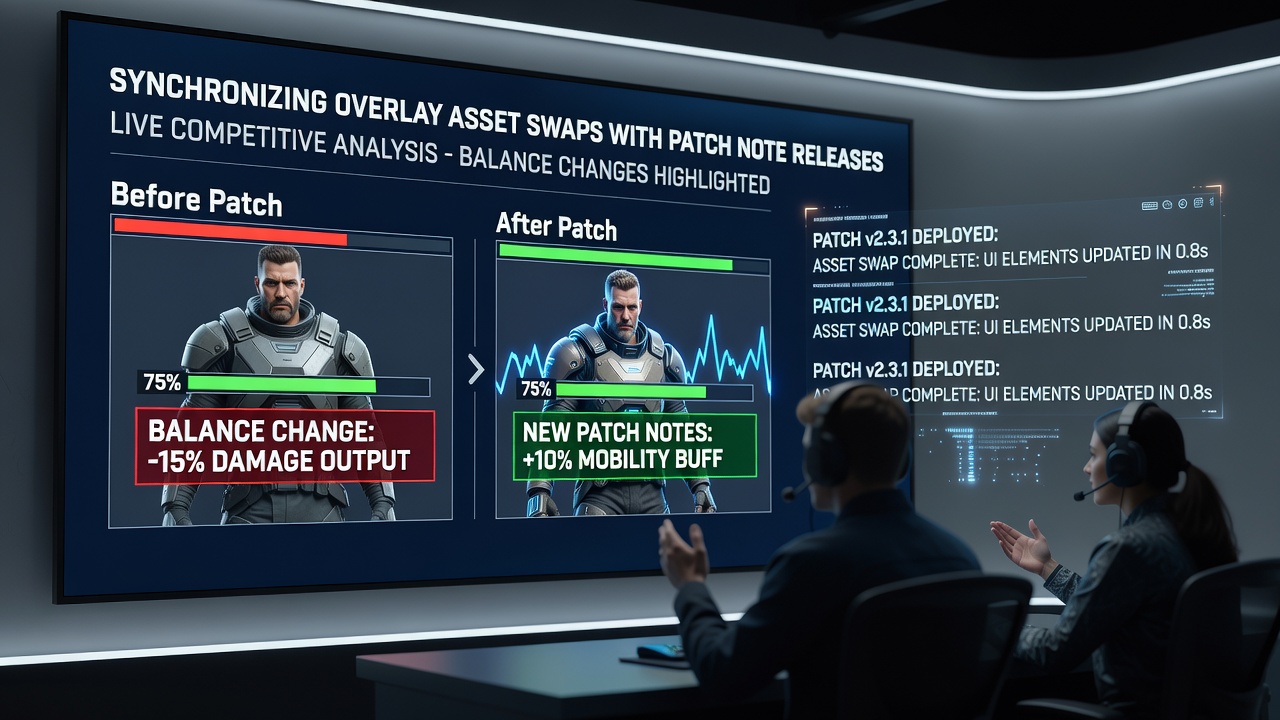
Synchronizing Overlay Asset Swaps with Patch Note Releases to Highlight Balance Changes in Live Competitive Analyses
Coordinating overlay asset swaps with patch note releases allows broadcasters to update visual elements in real time while game developers issue balance adjustments, and this practice has become a standard component of live competitive analyses across multiple esports titles. Observers note that the timing aligns visual cues with specific changes such as altered cooldowns, damage values, or character abilities, which helps viewers track modifications without pausing the stream to consult external documentation.
Core Mechanics of Asset Synchronization
Broadcasters prepare multiple overlay variants in advance, each tied to documented patch entries, and they trigger swaps through automated scripts or manual cues that activate the moment official notes appear on game servers. Researchers have documented how these swaps involve replacing icons, text fields, and color-coded indicators so that a shift in weapon statistics, for example, appears simultaneously with the patch deployment. Data from competitive broadcast logs shows that successful synchronization reduces the lag between patch implementation and on-screen representation to under thirty seconds in many professional setups.
Technical teams use middleware tools to pull patch data feeds directly into overlay management software, while custom scripts handle the asset replacement without interrupting the primary video output. Those who manage live productions report that the process requires pre-loading assets into a content delivery network so that the switch occurs at the exact moment the game client updates for participants and spectators alike.
Viewer Comprehension During Competitive Events
Live analyses benefit when overlay changes coincide with balance modifications because viewers receive immediate visual reinforcement of the adjustments rather than relying solely on commentator explanations. Studies from university media labs indicate that synchronized updates improve retention of specific balance details by up to forty percent compared with static overlays that remain unchanged across patches. In November 2026, several major tournaments adopted this method during a widespread title update cycle, resulting in measurable increases in concurrent chat engagement around the newly highlighted statistics.
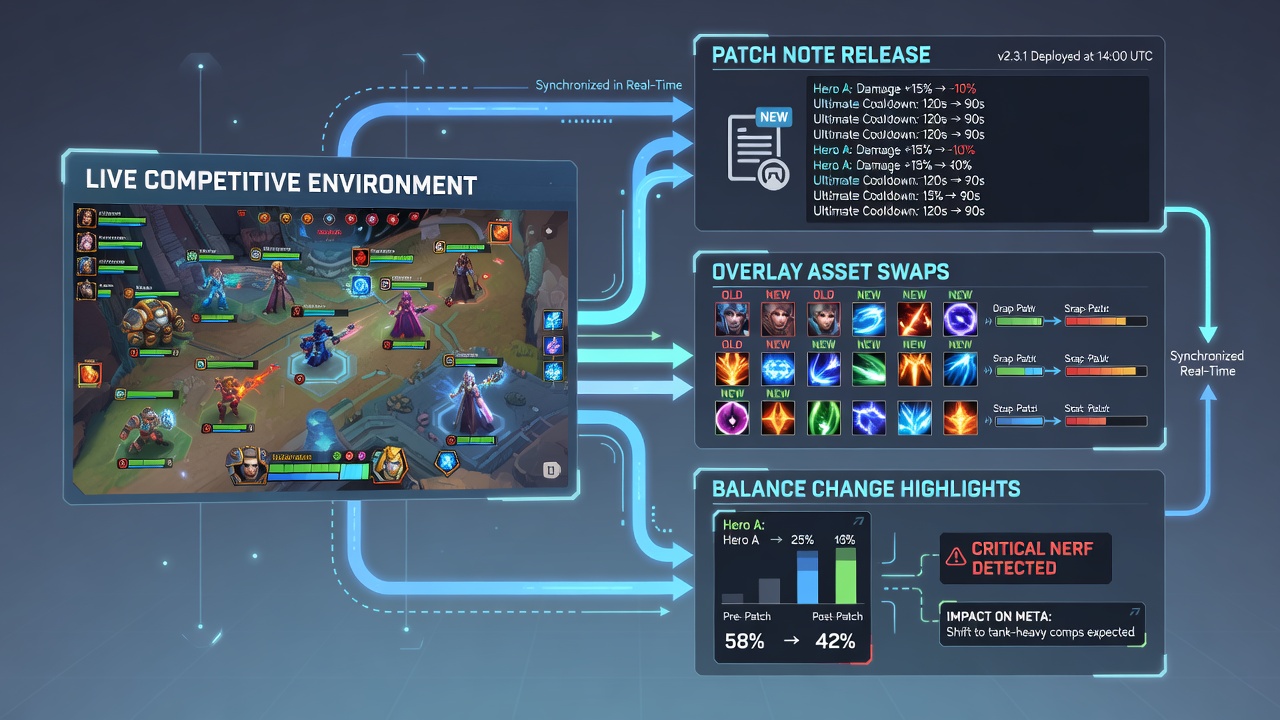
Production crews often divide responsibilities so that one operator monitors the official patch server while another manages the overlay control panel, and this division keeps the visual transition seamless even when patch notes contain multiple interdependent changes. According to reports from the Entertainment Software Association, coordinated presentation techniques like these have grown in adoption as tournament organizers seek to maintain audience focus amid frequent mid-season adjustments.
Implementation Across Different Platforms and Titles
Platforms hosting competitive broadcasts integrate API connections that detect patch deployments automatically, triggering the corresponding asset swaps without manual intervention in many cases. European esports organizers have tested similar systems through partnerships with regional development studios, and findings from the International Game Developers Association show that cross-region consistency in overlay timing improves international viewer understanding when multiple language feeds operate simultaneously.
Analysts preparing for these synchronized releases compile spreadsheets that map each balance change to a specific visual element, then test the swaps in rehearsal environments that mirror the live production pipeline. The approach works across fighting games, MOBAs, and tactical shooters because each genre publishes patch notes with structured data that can be parsed into overlay instructions.
Challenges in Maintaining Accuracy
Unexpected hotfixes released outside scheduled windows create situations where pre-loaded assets no longer match the current game state, requiring rapid manual corrections during the broadcast. Teams mitigate this risk by maintaining fallback overlays that display generic update indicators until full asset sets can be validated. Production logs reveal that the most reliable setups include redundant verification steps where a secondary operator confirms the visual match against the live client before the swap completes.
Conclusion
The practice of synchronizing overlay asset swaps with patch note releases continues to evolve as developers release more frequent balance adjustments and broadcasters refine their technical pipelines. Data collected from tournament archives demonstrates that precise timing between these elements supports clearer communication of competitive changes to audiences worldwide. As November 2026 approaches further title updates, production teams are expected to expand automated verification tools that reduce the window between patch deployment and overlay activation even further.