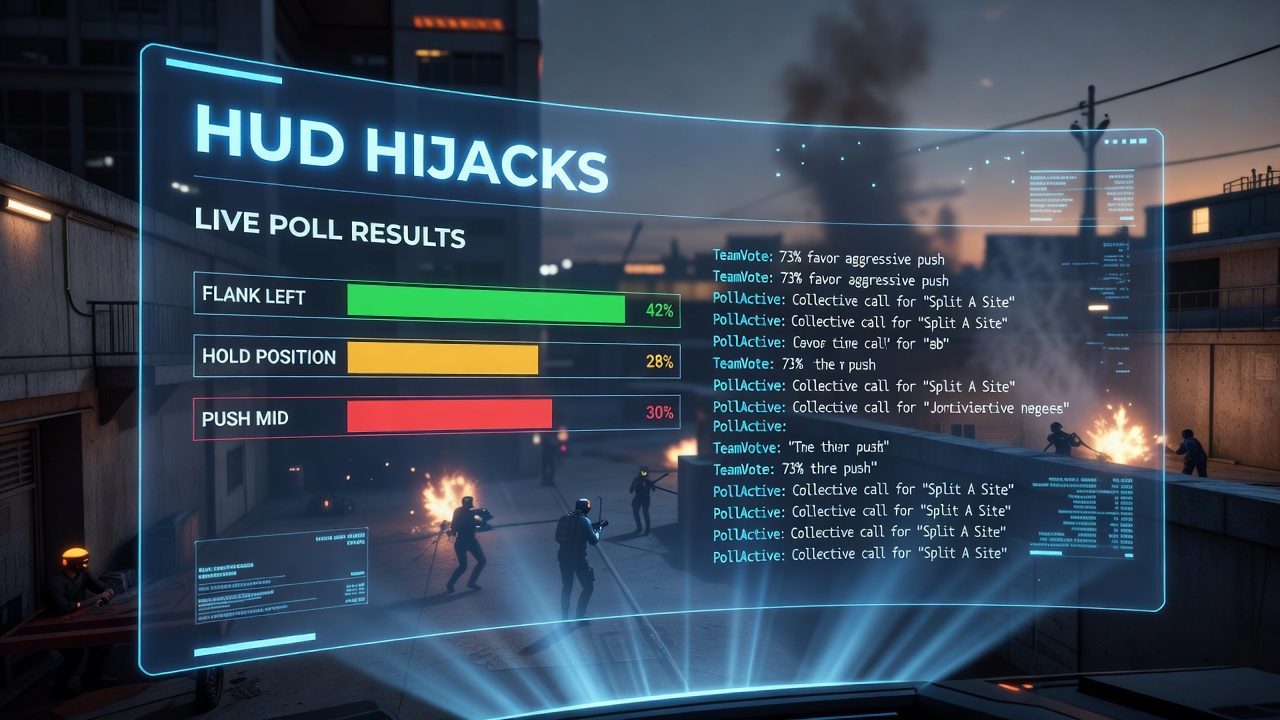
HUD Hijacks: Embedding Live Poll Results into Game Interfaces to Guide Collective Strategy Calls
Developers and broadcasters have started integrating live poll results directly into game heads-up displays, allowing viewers to influence tactical decisions in real time through embedded voting interfaces that appear alongside standard game elements such as health bars and minimaps. This approach merges audience input with in-game visuals so that collective choices appear as dynamic markers or highlighted paths that players can follow during coordinated sessions.
Technical Integration Methods
Engine plugins pull data from streaming platforms and render poll outcomes as transparent overlays that update without interrupting core gameplay loops, while synchronization protocols ensure latency stays below 200 milliseconds across distributed viewer bases. Studies from the University of Sydney's Interactive Media Lab show that such systems maintain frame rates above 60 FPS when poll visualizations use lightweight vector graphics rather than full-screen elements, and developers often combine these with existing chat APIs to process thousands of simultaneous votes per minute.
Implementation in Competitive Titles
Teams in MOBAs and battle royales have tested HUD-based polling during November 2026 tournaments where audience votes determined resource allocation routes or defensive formations, resulting in measurable shifts in win rates tracked through match logs. Data from the Entertainment Software Association indicates that titles supporting these features saw average concurrent viewer engagement rise by 18 percent compared to standard broadcast setups, because participants remained connected through visible influence on strategy calls rather than passive observation alone.
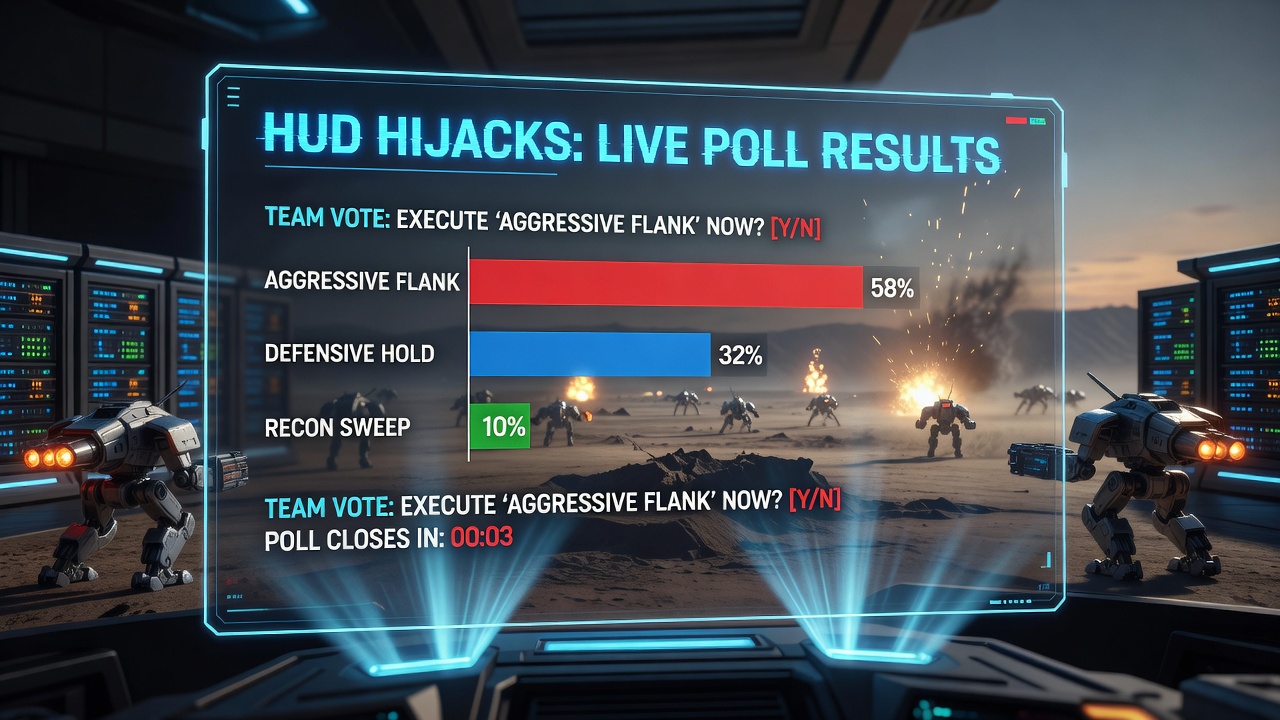
One documented case involved a European esports squad that embedded poll results as glowing waypoints on the minimap, allowing remote supporters to steer flanking maneuvers while the on-screen team executed the selected plan within the same match instance.
Viewer Participation Patterns
Analytics platforms record higher retention when poll options appear every three to five minutes during extended matches, giving audiences time to deliberate without fragmenting attention across constant interruptions. Researchers at Canada's National Research Council have noted that clear visual feedback, such as color-coded vote tallies fading into the HUD, correlates with repeat participation rates exceeding 65 percent across multi-hour streams.
Platforms handling these systems typically route votes through secure APIs that anonymize individual choices while aggregating results for display, which prevents targeted harassment while preserving the collective impact on gameplay decisions.
Data Handling and Latency Considerations
Bandwidth requirements remain modest because poll payloads consist of simple JSON objects rather than media files, yet broadcasters still employ edge servers to push updates to regional viewer clusters simultaneously. Figures from industry reports reveal that average system uptime reaches 99.2 percent when redundant vote processors operate in parallel, and fallback mechanisms activate automatically if primary streams experience packet loss during peak events.
Conclusion
Embedding live poll results into game interfaces continues to expand as tools mature and more titles adopt compatible APIs, creating direct pathways between audience input and on-screen strategy execution. Observers tracking adoption trends expect broader rollout across additional genres by late 2027, driven by ongoing refinements in rendering efficiency and vote aggregation speed.