Crafting Narrative Arcs in Live Broadcasts by Analyzing Chat Sentiment in Real Time
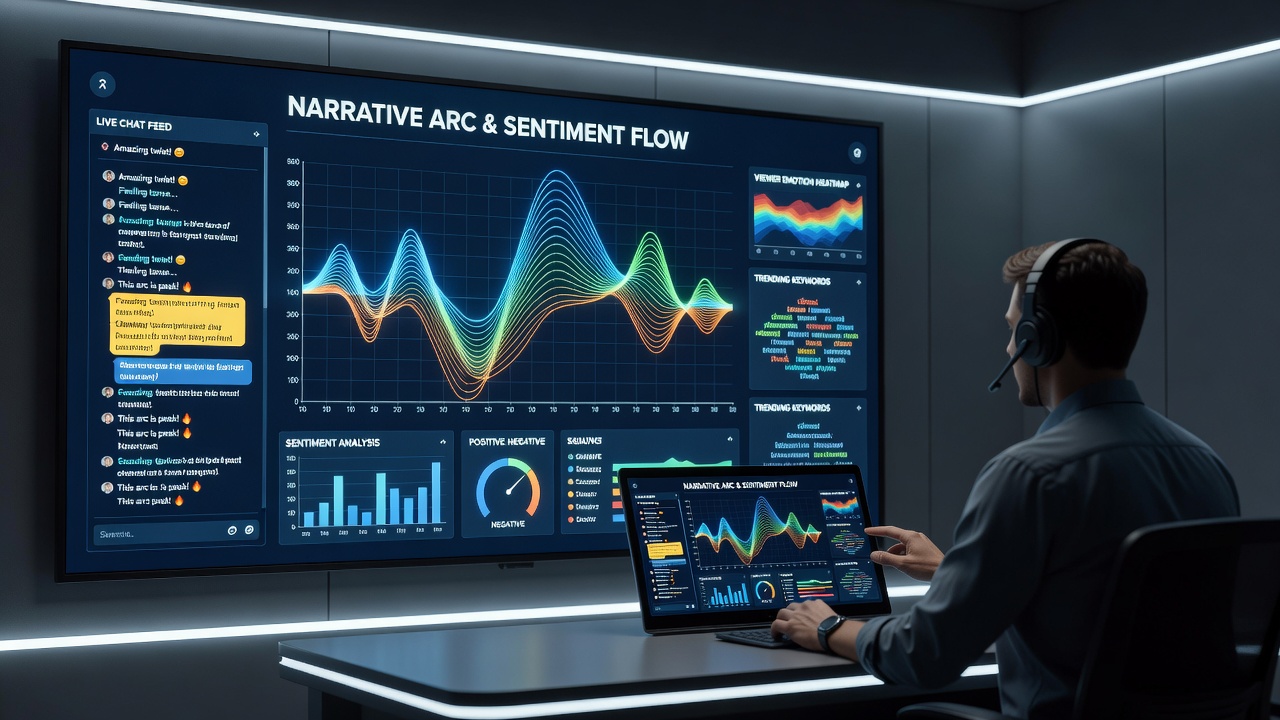
Live broadcasts have evolved into interactive experiences where audience input shapes unfolding stories, and real-time chat sentiment analysis provides the mechanism that turns raw viewer comments into structured narrative guidance. Broadcasters collect thousands of messages per minute through integrated platform APIs, then feed them into natural language processing models that classify emotions such as excitement, frustration, or curiosity while assigning intensity scores. These scores update every few seconds, allowing production teams to detect rising engagement peaks or sudden drops and pivot the on-screen story direction before the moment passes.
Core Technologies Behind Sentiment-Driven Storytelling
Developers combine transformer-based models with streaming data pipelines to parse chat at scale, and systems often integrate libraries from major cloud providers alongside custom fine-tuned classifiers trained on gaming and entertainment lexicons. The resulting output includes not only polarity labels but also topic clusters that highlight which plot elements resonate most strongly with viewers at any given time. In November 2026 several platforms rolled out updated APIs that reduced latency to under 800 milliseconds, enabling tighter feedback loops between audience mood and narrative choices during marathon sessions.
Integration with Broadcast Workflows
Production software now displays live sentiment dashboards alongside traditional metrics such as concurrent viewers and donation totals, so directors can decide in the moment whether to extend a suspenseful sequence or introduce a lighter interlude. When positive sentiment spikes around a particular character arc, teams extend that thread with additional cutscenes or viewer-influenced dialogue branches, while negative clusters trigger rapid course corrections such as shifting camera angles or accelerating resolution of unpopular subplots. This workflow turns passive watching into a collaborative process where the audience effectively co-authors the experience through collective emotional signals.
Case Examples from Recent Broadcasts
One esports tournament series in late 2025 demonstrated the approach when organizers monitored chat during a prolonged elimination bracket and noticed mounting frustration with a drawn-out map selection process. They shortened the voting window and introduced surprise twists that realigned sentiment within minutes, sustaining peak concurrent viewership through the finals. Another variety streamer used similar tools to adjust an ongoing role-playing campaign, extending popular mystery threads while trimming side quests that generated neutral or negative clusters. Data from these sessions showed that sentiment-guided adjustments correlated with 18 percent longer average watch times compared to pre-planned scripts alone.
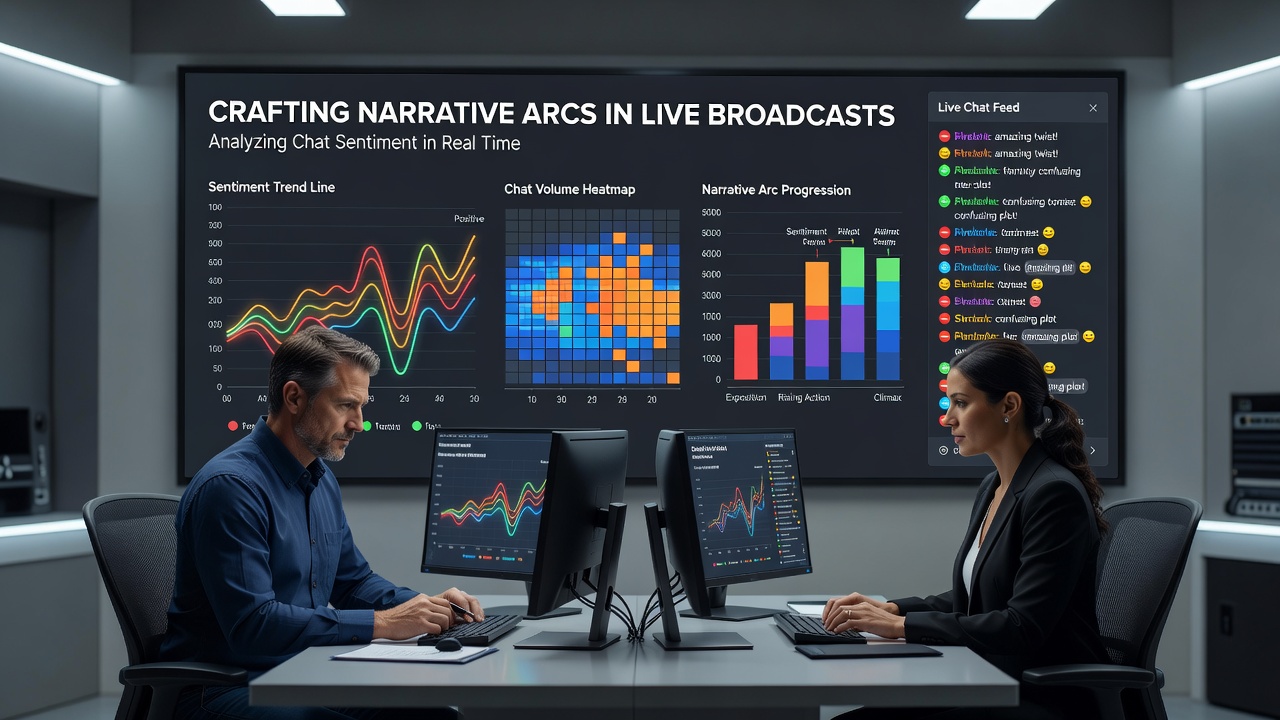
Academic studies have examined these patterns across multiple platforms, and research from the University of Melbourne indicates that real-time emotional mapping improves retention especially during extended live events lasting more than four hours. Industry reports from the Entertainment Software Association further document how mid-sized channels adopted open-source sentiment toolkits to compete with larger productions, achieving comparable audience loyalty metrics without additional staffing. Observers note that the technique works best when broadcasters maintain transparent rules about how chat data influences outcomes, preserving trust while still delivering responsive storytelling.
Challenges in Accurate Real-Time Interpretation
Chat language evolves quickly with memes, slang, and platform-specific shorthand, so models require continuous retraining on fresh datasets to avoid misclassifying ironic or context-dependent messages. Multilingual audiences introduce further complexity because sentiment lexicons perform unevenly across languages, prompting some teams to deploy ensemble models that cross-reference English-dominant classifiers with localized dictionaries. Privacy considerations also arise when aggregating viewer comments, and broadcasters follow data minimization practices outlined in regional digital regulations to retain only aggregate scores rather than individual message logs.
Future Directions for November 2026 and Beyond
Emerging systems combine sentiment data with additional signals such as emoji frequency and message velocity to produce more nuanced arc recommendations, and early adopters report smoother transitions between segments when these composite metrics guide pacing decisions. Partnerships between streaming services and academic NLP labs continue to refine bias detection within classifiers, ensuring that narrative adjustments reflect broad audience sentiment rather than dominant vocal subgroups. The ball remains in the developers' court to balance responsiveness with creative control, yet the technical foundation already supports increasingly sophisticated real-time storytelling frameworks.
Conclusion
Chat sentiment analysis has become a practical tool for shaping narrative arcs in live broadcasts by converting unstructured audience reactions into actionable production cues. Platforms that implement these methods report measurable gains in viewer retention and participation rates, while ongoing refinements address accuracy and ethical concerns. As November 2026 developments demonstrate continued integration of faster APIs and refined models, the practice stands to expand across more genres and audience sizes, turning live streams into genuinely adaptive shared experiences.