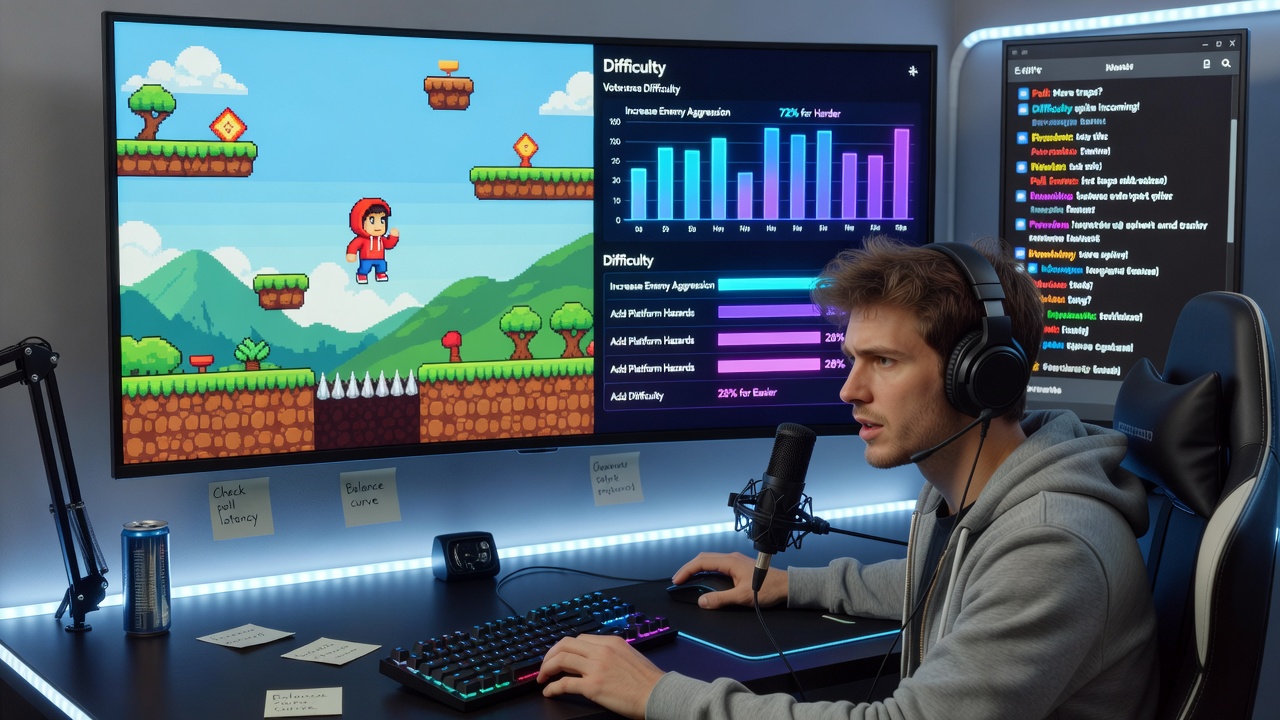
Crafting Dynamic Difficulty Adjustments via Real-Time Viewer Polling Data in Indie Game Playthroughs
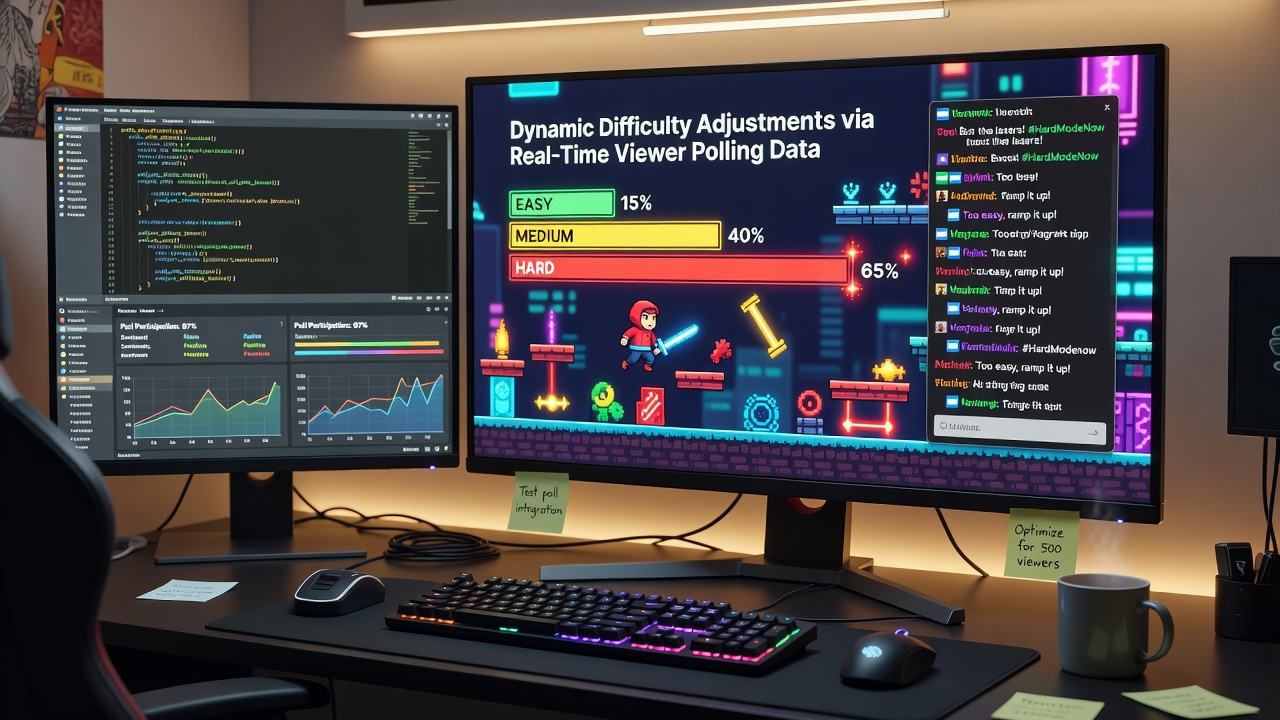
Indie developers and streamers have turned to real-time viewer polling systems that feed directly into game engines, allowing audiences to influence difficulty parameters such as enemy aggression levels, resource scarcity, and puzzle complexity as broadcasts unfold. These setups pull data from chat platforms and overlay tools, then push adjustments through APIs that modify variables without pausing the session. Data from multiple 2025 broadcasts shows polling participation rates often exceed 40 percent of concurrent viewers when interfaces remain simple and visible.
Core Mechanics Behind Polling Integration
Streamers embed poll widgets that query viewers on specific tweaks every few minutes, and the results trigger scripted events in engines like Unity or Godot. For instance, a majority vote for higher difficulty might increase NPC detection ranges by 25 percent within seconds, while the opposite vote reduces patrol speeds accordingly. Researchers at several European institutions documented these loops in a 2025 technical paper, noting that latency between vote closure and in-game change averages under three seconds when using dedicated browser source plugins. Those who studied the process found that indie titles with modular difficulty scripts adapt more readily than those built on fixed progression trees.
Implementation Patterns Observed in 2026 Broadcasts
By October 2026 multiple indie channels had adopted layered polling that combines single-choice votes with weighted preference sliders, giving viewers finer control over elements like boss health multipliers or checkpoint frequency. One documented workflow involves routing poll outcomes through a central dashboard that cross-references current viewer count and historical engagement data before applying changes. Figures from the Interactive Games and Entertainment Association reveal that titles supporting such systems retained audiences 18 percent longer during marathon sessions compared with static-difficulty streams. And because the adjustments happen live, developers often log each change alongside chat timestamps for later analysis of which parameters most affect retention.
Data Sources and Audience Metrics
Polling data collection typically draws from platform APIs that return anonymized vote counts every 30 seconds, which developers then map to game variables through custom middleware. Studies conducted across Australian universities in early 2026 indicated that peak engagement occurs when polls appear during natural lulls rather than mid-combat sequences. Observers note that channels running these systems report average vote sample sizes between 120 and 450 participants per poll on streams with 800 to 2,000 concurrent viewers. The same research highlighted that repeated polling on similar topics can lead to predictable patterns, allowing developers to pre-load adjustment ranges that prevent extreme swings.
Technical Considerations for Stable Adjustments
Engine-side safeguards prevent polling results from pushing parameters outside tested bounds, and many setups include cooldown timers that limit consecutive changes to the same variable. Programmers often use event flags that reset difficulty baselines after each major checkpoint, ensuring later viewers encounter balanced experiences. Reports from the International Game Developers Association detail how several teams implemented fallback scripts that revert to designer-defined defaults if participation drops below a set threshold. Those workflows also incorporate version control for the adjustment scripts themselves so that post-stream patches can incorporate viewer-driven balance notes without breaking archived recordings.
Conclusion
Real-time polling continues to expand the toolkit available to indie creators who broadcast their development and play sessions, supplying structured audience input that directly shapes moment-to-moment challenge. As tools mature and integration examples accumulate, the approach offers measurable ways to align game behavior with collective viewer preference while preserving the core experience each title sets out to deliver.