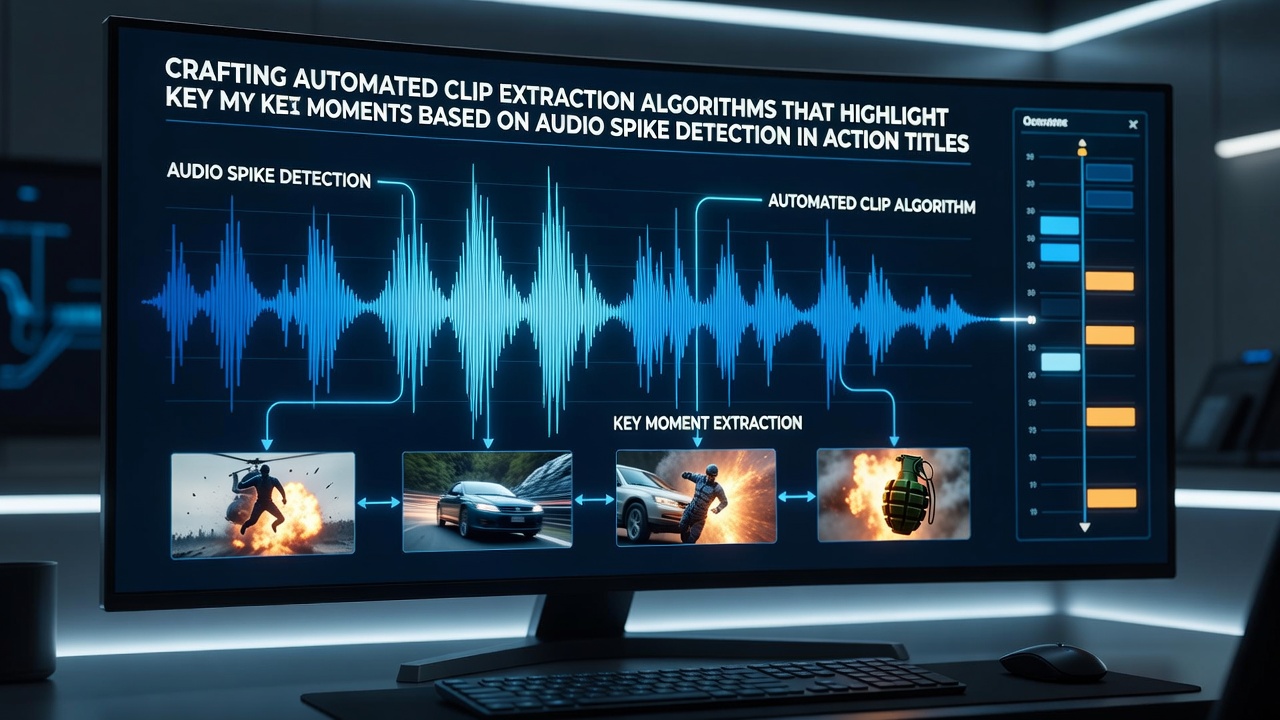
Crafting Automated Clip Extraction Algorithms That Highlight Key Moments Based on Audio Spike Detection in Action Titles
Developers in the gaming and streaming sectors have turned to audio spike detection as a core technique for automating highlight clip creation in action titles where rapid sound intensity changes mark critical gameplay sequences such as boss encounters or multiplayer skirmishes.
These systems analyze live or recorded audio streams by monitoring amplitude thresholds and frequency shifts then trigger extraction routines when predefined criteria are met which allows platforms to generate short-form content without constant manual oversight from broadcasters.
Core Principles of Audio Spike Detection in Gaming Contexts
Audio processing pipelines begin with real-time sampling of game soundtracks at rates typically exceeding 44.1 kHz to capture transient peaks from explosions gunfire or crowd reactions in titles like fast-paced shooters and battle royales. Signal analysis tools apply root mean square calculations over sliding windows to flag deviations that exceed baseline levels by 20 to 40 decibels while filtering out steady background music through bandpass techniques that isolate percussive elements.
Researchers at institutions across multiple regions have documented how such methods integrate with game engines to correlate spikes directly with in-engine events for instance linking a sudden volume surge to a vehicle crash or ability activation which improves the precision of subsequent clip boundaries.
Algorithm Construction and Implementation Steps
Engineers construct these algorithms through layered stages that start with noise reduction filters followed by peak detection modules using derivative-based triggers and end with temporal segmentation that extends clips by fixed buffers of three to five seconds before and after each detected event. Machine learning refinements often layer on top of classical signal methods to classify spike types according to spectral signatures allowing the system to prioritize combat-related audio over menu sounds or ambient loops.
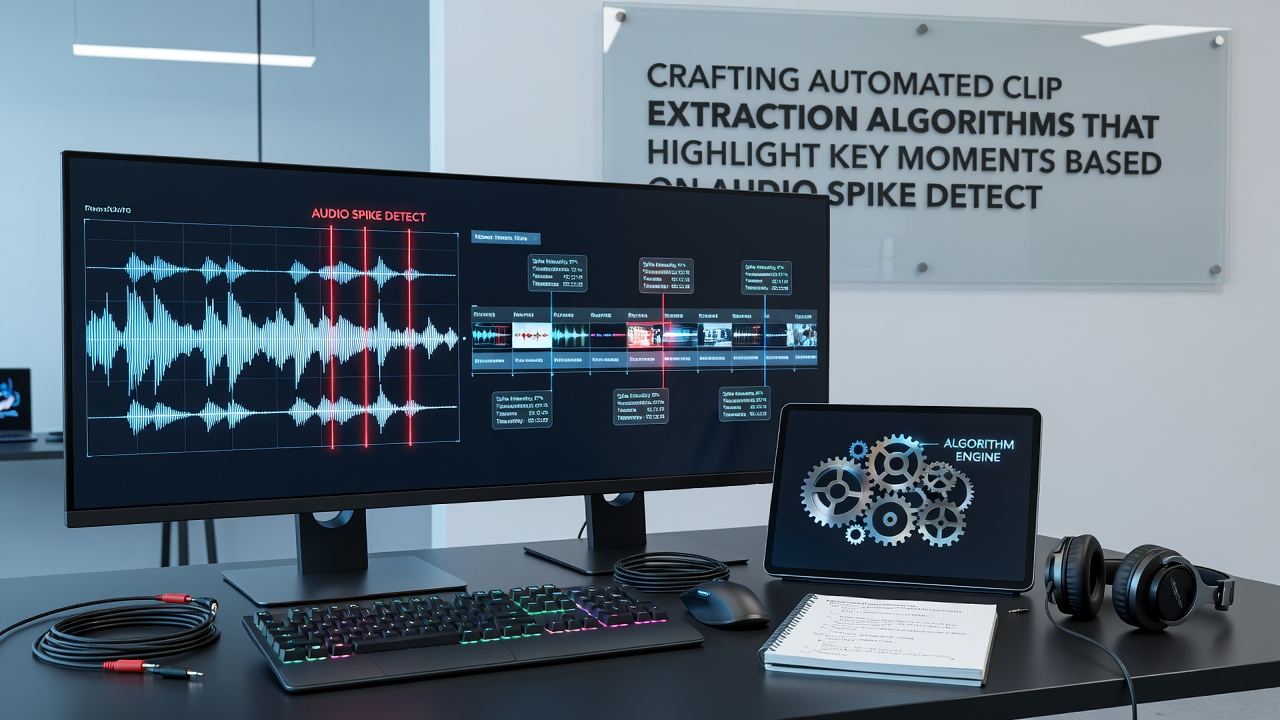
One implementation example involves open-source libraries combined with custom scripts that process OBS or Streamlabs outputs in real time where the detection module feeds directly into export functions that render MP4 segments ready for social media upload. Data from collaborative projects shows processing latency remains under 500 milliseconds on standard hardware which supports live applications during marathon broadcasts.
Applications Within Streaming Ecosystems
Streaming services deploy these tools to manage viewer engagement by automatically surfacing key moments from extended sessions in action genres where manual clipping proves time-intensive. Integration occurs via API connections that push detected clips to platforms such as YouTube or Twitch clip libraries while preserving original quality through adaptive bitrate handling.
According to findings published by the University of Melbourne audio engineering group these approaches have expanded to handle multi-channel surround mixes common in modern action titles which requires additional spatial audio parsing before spike identification occurs. Industry reports from the Entertainment Software Association further indicate growing adoption rates among mid-tier broadcasters who lack dedicated editing teams yet seek consistent highlight output.
Technical Challenges and Mitigation Approaches
Variability in game audio design presents ongoing hurdles because some titles layer dynamic music systems that can mask or mimic event spikes leading developers to incorporate contextual game state data such as health bar changes or kill feeds as secondary validators. Hardware differences across viewer devices also affect playback consistency prompting the use of standardized loudness normalization per ITU-R BS.1770 guidelines to maintain detection reliability.
Yet collaborative testing across European research consortia has produced hybrid models that combine audio cues with visual motion vectors from screen capture which reduces false positives by up to 35 percent in controlled evaluations conducted through 2025.
Developments Anticipated Around September 2026
Industry observers note that September 2026 marks the scheduled rollout of updated toolkits from several middleware providers that embed refined spike detection directly into popular streaming software packages. These updates incorporate improved machine learning classifiers trained on expanded datasets from global action title libraries which should enhance cross-genre adaptability.
Early demonstrations suggest tighter synchronization between detected audio events and on-screen metadata which could streamline workflows for tournament organizers managing multiple simultaneous feeds.
Conclusion
Automated clip extraction through audio spike detection continues to evolve as a practical solution for content creators working with action titles where sound design drives narrative peaks. The combination of established signal processing methods with emerging classification techniques delivers measurable efficiency gains while maintaining factual alignment between detected moments and actual gameplay significance. Ongoing refinements from academic and industry sources worldwide point toward broader accessibility for both individual streamers and larger production teams seeking scalable highlight generation.